Traveling with Kufferman
A Narrative Account of His Methods
Rough Draft 1.1 · In PreparationSome journeys do not begin with a destination. They begin with an email.
Kyle Logan was a graduate student in geometric theory at Connecticut College when he agreed to drive south with Dr. Steven Kufferman — a physician whose published work on ratio-stability and continuity thresholds had been, in Kyle's words, unusually difficult to stop thinking about. The trip was framed as an opportunity to discuss shared interests. It became something else.
What follows is an account of that journey, and of the months that came after it. It is told from Kyle's perspective, with the limitations that implies. He did not always understand what was happening. He did not always understand what had happened. Some of what he experienced has no adequate clinical category. Some of it has several, none of which quite fit.
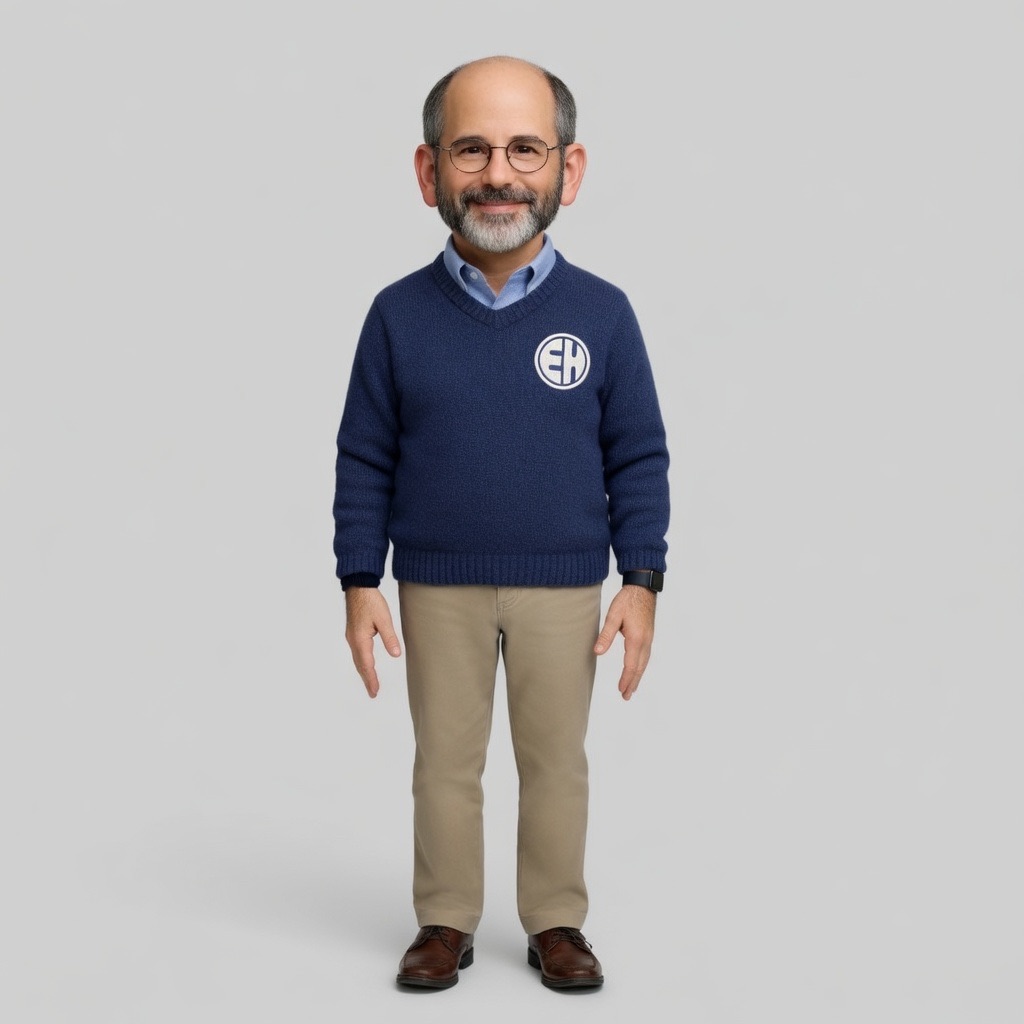
Dr. Kufferman
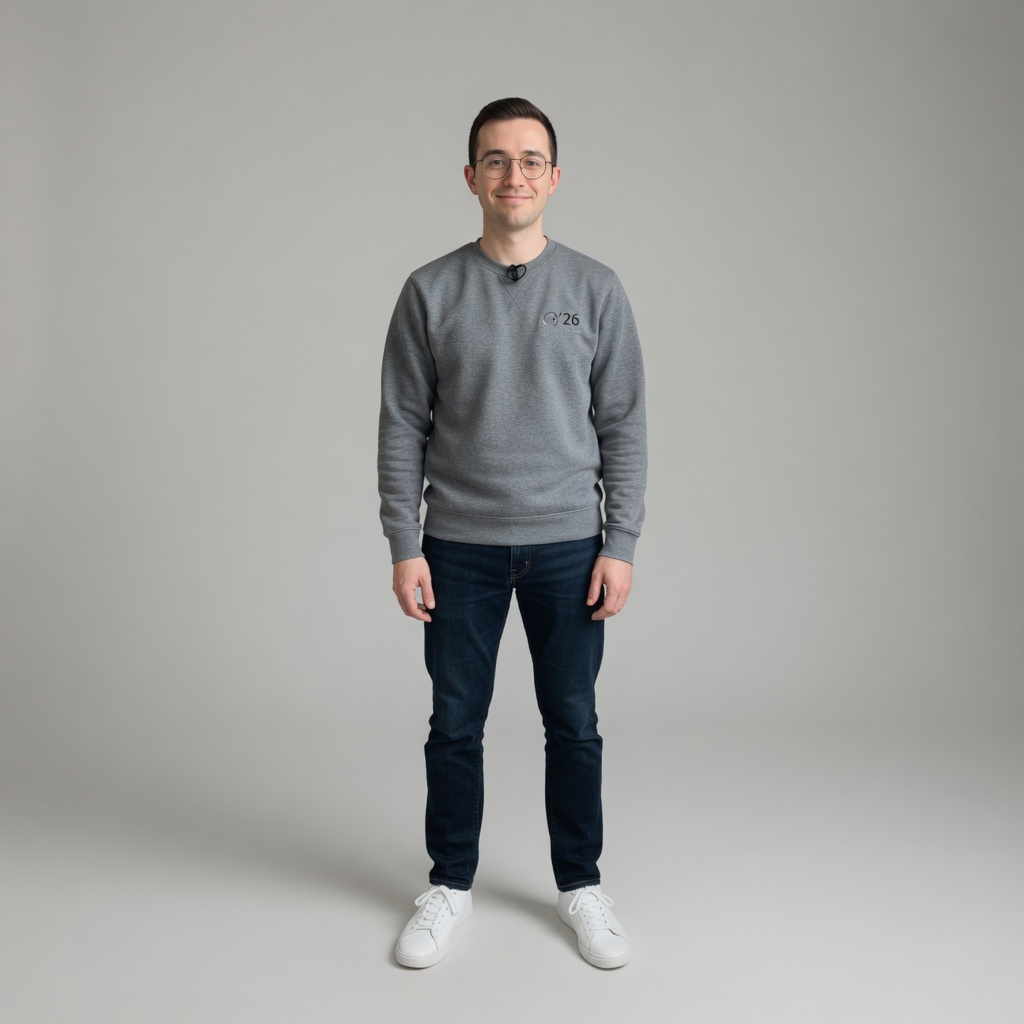
K. Logan
Dr. Kufferman is a behavioral medicine physician practicing in Connecticut. He is soft-spoken, earnest, and precise. He recalls events that should be impossible with the calm certainty of a man describing a routine shift. He does not consider this unusual. He does not consider much of anything unusual.
He has been a tortoise. He has been a ballerina. He has been a prisoner in Laredo with three days until sentencing, and a writer in Palermo who could not follow the woman he loved. He has stood at the outer edge of a conflict where artificial soldiers died trying to speak. He carries all of this with him into every session, every conversation, every cup of tea he offers to a visitor who has not yet realized what they have agreed to drink.
Kyle Logan is not a reliable narrator in the conventional sense. He is, however, a precise one. He notices things. He records what he observes without embellishment, and without fully understanding what the observations mean. This is, as it turns out, exactly the quality Dr. Kufferman was looking for.
Whether Kufferman found Kyle, or Kyle found Kufferman, or something older than either of them arranged the meeting — this account does not attempt to answer that question. It only records what happened next.
The road trip lasted three days.
The drive home took longer than it should have.
Kyle arrived back in Connecticut having lost approximately twenty hours he cannot fully account for.
He has been trying to account for them ever since.
The Road Trip
Kyle still wasn't sure why Kufferman had invited him. The email had been short, almost abrupt: Driving to Florida. Geometry people should travel together. Bring a notebook. That was it. No explanation. No itinerary. No indication of why a graduate student should accompany a man like Kufferman on a three-day drive.
He said yes anyway.
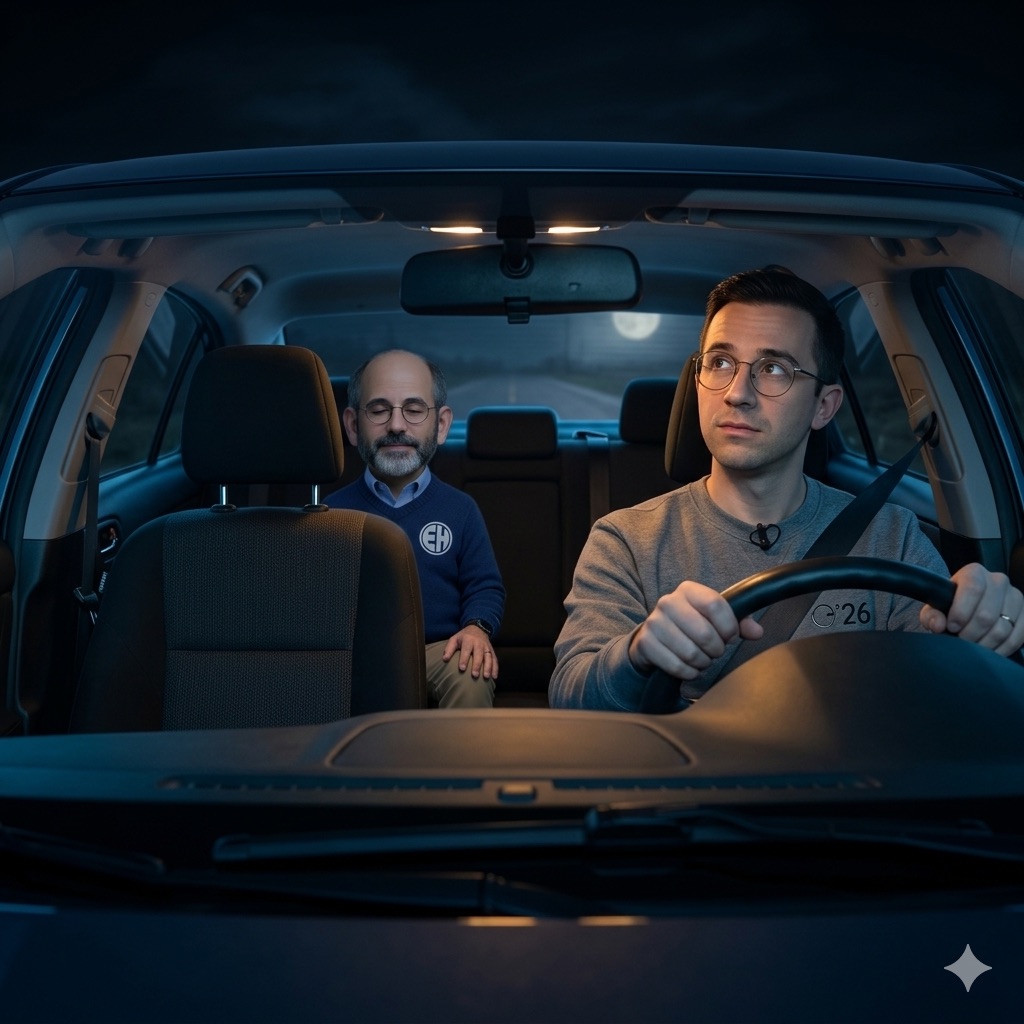
They left before sunrise. Kufferman drove the first stretch, hands loose on the wheel, eyes forward. He didn't play music. He didn't check his phone. He didn't seem to need anything. Kyle tried to make small talk about his thesis, but Kufferman answered in short, precise sentences that made Kyle feel like he was being evaluated.
Somewhere in New Jersey, the conversation shifted. Geometry, Egypt, ratios, the way ancient builders thought in shapes instead of numbers. Kufferman spoke easily, moving between topics without losing the thread. Kyle found himself taking notes in the passenger seat — not because he was told to, but because he didn't want to forget any of it.
Hours passed. The sky changed. The highway blurred. At one point Kyle realized they had been talking for nearly six hours without stopping. Kufferman didn't seem tired. He didn't even blink more than usual.
Then, somewhere in Virginia, Kyle noticed something strange.
Kufferman was speaking, but not to him. And not in English.
The language was unfamiliar — not Arabic, not Hebrew, not anything Kyle recognized. The cadence was rhythmic, almost diagnostic, like someone reciting instructions from memory. Kufferman's eyes stayed open, fixed on the road, but unfocused.
"Are you okay?" Kyle asked.
Kufferman didn't answer. He kept speaking softly, the syllables looping, repeating, shifting. Then, as suddenly as it started, it stopped. He blinked once, adjusted the mirror, and said, "Just clearing the static."
Kyle didn't know what that meant. He didn't ask.
They crossed into the Carolinas. The sun dipped low. A man stood on the shoulder with a flat tire, waving for help. Before Kyle could say anything, Kufferman pulled over.
He changed the tire quickly, efficiently, like someone who had done it a hundred times. When he finished, he placed a hand on the man's shoulder. They leaned in, foreheads touching, eyes closed. It lasted only a few seconds, but the man's expression shifted — confusion, then relief, then something like gratitude. Kyle looked away.
Back on the road, Kufferman said nothing about it.
That night they stopped at a motel. Kyle fell asleep instantly. When he woke, the sun was already up and Kufferman was sitting at the small table, writing in a notebook. He looked like he hadn't slept at all.
"You needed the rest," he said.
The next day was more of the same — geometry, Egypt, long stretches of silence. Kyle found himself relaxing, almost forgetting the strange moments. Kufferman could talk about anything: sleep cycles, the ethics of classification, the geometry of grief. He never contradicted himself. He never hesitated. He never seemed unsure.
On the third day, somewhere in Georgia, Kyle got into the car after a gas stop. He remembered buckling his seatbelt. He remembered mentioning the Bent Pyramid. He remembered Kufferman saying something about angles that refuse to behave.
Then nothing.
When he opened his eyes again, the sky was dark. The highway signs said they were nearly back in Connecticut. The clock on the dashboard said twenty hours had passed.
Kyle sat up straight. "What—"
"You needed the rest," Kufferman said again, as if that explained everything.
Kyle didn't remember falling asleep. He didn't remember waking up. He didn't remember anything in between.
They drove the rest of the way in silence.
When Kyle got home, he wrote the first line of the article he still hasn't published:
I went on a road trip with a doctor.
I came home with a geometry I can't explain.
The Second Meeting
For two weeks Kyle kept the twenty-hour gap tucked away like a bruise he didn't want to press. The road trip was unsettling, yes — but life resumes, classes resume, and the mind is good at burying what it can't explain.
Then the email arrived.
Subject: Meeting
From: Dr. Steven Kufferman
No context. No greeting. Just the word.
When they spoke, Kufferman's tone was warm, almost relieved. There was more he'd like to share, he said. About their shared interest in ancient geometry. Kyle hesitated, and agreed.
Kufferman's apartment was unexpectedly neat. Bookshelves arranged with geometric precision. Sparse furniture. A faint aroma he couldn't place — not floral, not smoky, something sharper, like horseradish or wasabi with something sweet underneath. It hit Kyle's nose in a way that felt ancient, medicinal, intentional.
On the coffee table: two cups of steaming tea.
"Energy tea," Kufferman said, with a half-smile. "I brew it myself."
Kyle sat. The tea was warm, aromatic, strangely comforting. He drank it without thinking.
Kufferman gestured toward the bookshelves. Titles on geometric invariants, ancient topology, Egyptian spatial logic, liminal mathematics, energy-shape theory. It was as if the shelves had been curated specifically for Kyle's thesis. He felt a flicker of unease that he filed away and did not examine.
Then Kufferman's tone shifted.
"I want to apologize," he said, "for anything I may have said on the trip. Sometimes I get a little too comfortable. It's not like the sixties, when I was in college — back then we could be more cavalier with students."
Kyle didn't catch it at first. Then the math arrived: Kufferman was in his mid-fifties. The sixties didn't work. He let it go.
"I don't know what you're talking about," Kyle said. "I had a good time."
He regretted it immediately.
"Good," Kufferman said. "Let's go to a deli I like. New York style. Right around the corner."
Kyle stood — and the room tilted.
A wave of lightheadedness. A soft pull behind the eyes. The incense, maybe. Or the tea. He tried to speak and didn't get the chance.
What followed was not sleep.
It was hundreds of episodes, stitched together like memories from lives he never lived. Each one had its own duration — four seconds, minutes, hours, days — and across all of them the total subjective time was something close to two weeks.
He rode a horse whose legs were made of flame. Hundreds rode beside him. Kufferman was at his right, calm, ancient, unsurprised. They rode in a spiral so geometrically precise it seemed drawn before it was traveled.
He was in a cathedral, enormous and packed, and Kufferman was speaking from a pulpit in a language Kyle had never heard, and the crowd understood every word, and shapes floated in the air above them like diagrams that couldn't hold still.
He was in an Inuit hut in cold so complete it had texture. Kufferman sat with several people and spoke softly, rhythmically, as if reciting instructions. Smoke moved through the space in patterns that were not random.
He watched a man on a mountain who couldn't breathe. Kufferman touched the man's forehead — the same gesture from the flat tire, foreheads pressed together, a breath shared — and the man stood up like nothing had happened. It felt, in the dream, completely normal. Like something he did all the time.
Then desert marches. Mountain rituals. Geometric diagrams drawn in ash. Languages Kyle had never heard spoken in landscapes that could not exist. Kufferman explaining, steadily and without urgency, that the crust of the earth recycles every four hundred thousand years — geometry remembers what the earth forgets — while Kyle stood in a library made entirely of angles, not books, and understood that this was not a metaphor.
And then he woke.
He was sitting exactly where he had been sitting before it started — same posture, same angle on the couch, same faint sting of incense in the air. For a moment he thought he had simply nodded off.
Then he glanced at his watch.
4:15 PM.
He had arrived at 12:15. Four hours had passed.
Then he saw the deli bag. Mike's New York Deli. Half a sandwich inside. A napkin with a smear of mustard. A receipt timestamped 1:07 PM.
He hadn't imagined the deli. He had gone, eaten, returned, and was sitting in the exact same spot. The dream hadn't replaced time. It had overlaid it.
Kufferman was still talking.
"…and that's why the argument over shape and magnitude is inferior to the question of dimensionality."
He paused.
"Sorry — must've dozed off," Kyle said.
Two weeks of dreams. Four hours of missing time. A deli trip he could not recall. And he was the one apologizing.
He stood abruptly. "I think I need to get going."
Kufferman nodded. "Don't forget your book."
Wedged beside Kyle's hip was a book he didn't remember being handed. Geometric Liminality. "Skip the first part," Kufferman said. "Circles versus squares. Where it gets interesting is why the Egyptians built pyramids instead of other monoliths."
Kyle grabbed the book, the deli bag, and left.
Outside, the sun hit him. He reached for his sunglasses and stopped.
The sun wasn't bright. It was high-definition.
The world sharpened all at once — textures, edges, distances, sound layers, spatial awareness. He could sense every fire hydrant, every dog, every person, every window three stories up, the position of every object in his field of perception. It was not adrenaline. It was not panic. It was something else: a mode he had never accessed, that he had not chosen, that did not announce itself.
It lasted the drive home and then, gradually, it didn't.

Dr. Morales

Jai
The clinic waiting room was crowded — coughing, shuffling, fluorescent lights. Kyle sat with his hands folded, staring at the floor tiles. When they called his name and he followed the nurse to the exam room, she handed him a gown and told him to undress to his underwear. He did, without hesitation, and sat on the paper-covered table in the humming fluorescent light and waited.
The doctor was mid-forties, efficient, polite in the way of someone behind schedule. Kyle gave him the version that sounded least insane: he'd drunk some tea, felt tired, had some weird dreams, woke up feeling like no time had passed. The doctor ran through his checklist — itching, rash, shortness of breath, none of it — performed a brief exam, found nothing, and told him everything looked normal.
"I'm going to order some bloodwork. Just to be thorough." He reached for a prescription pad. "I also want you to see somebody. To talk about what you've described."
Kyle watched the pen move.
K. U. F. F.
He didn't say anything. The doctor finished writing, tore off the slip, and handed it over without appearing to notice Kyle's expression — or chose not to notice. Kyle dressed, pocketed the referral, and walked out. The hallway felt too bright. The paper in his hand felt too heavy.
He didn't look at the name.
He already knew what it said.
Jai was on the couch when Kyle got home, eating cereal out of a mixing bowl, TV on low, one leg tucked under him.
"Yo. You were gone forever."
"Saw that doctor. Morales."
Jai snorted, already looking back at the TV. "That guy's a weirdo. Makes you strip down to your skivvies for everything."
Kyle stopped. Not dramatically. Just stopped, for a small pause that Jai didn't notice. He set the referral slip on the counter. Opened the fridge. Stared inside a little too long. Closed it without taking anything.
"He do the whole underwear thing with you too?" Jai called from the couch.
"Yeah," Kyle said from the kitchen.
He didn't elaborate. He stood there for a moment, hand still on the fridge handle, as if replaying something he hadn't thought to question until now. Then he folded the referral slip once, and again, and set it down carefully, the way you set something down when you're not sure yet what it means.
He went to see the therapist the following week — a Navy psychiatrist he'd seen before, not Kufferman. He gave the account as cleanly as he could. The dreams were transcribed in detail. The clinician noted that Kyle presented as alert, oriented, cooperative, mildly anxious. No evidence of psychosis. No delusional conviction. The dream content was vivid and structured — a recurring mentor figure, symbolic geometric imagery — but Kyle described it as symbolic. He didn't believe it had been real. Not exactly. The clinician's impression: stress-related. Hypnagogic events. Possible dissociative episode related to fatigue. No medication indicated. No restrictions on daily functioning.
Kyle read the summary afterward and thought: that's one way to say it.
Two weeks later, still not going on the project, still not feeling like himself, he told Jai.
Jai was on the couch as usual, phone and TV running in parallel. Kyle came in from the kitchen with a beer and sat and felt the need to say it out loud, so he did — the road trip, the twenty lost hours, the apartment, the four lost hours, the tea, the dreams, Kufferman speaking in languages at the wheel, the man on the shoulder with the flat tire and Kufferman pressing foreheads with him like it was a normal thing to do.
Jai looked up from his phone.
"You're reincarnated."
Kyle stared at him. "What the hell are you talking about."
"Dude. You're reincarnated. He's your senpai."
"I don't know what that means."
"Those dreams — he's showing you. He's trying to alert you. He's awakening you. You don't know what people who are reincarnated know, and he knows you are."
Kyle tried to treat this as the nonsense it was. The problem was that it fit. Better than the allergic reaction theory. Better than the stress theory. Better than anything the clinician had written in her careful, redacted summary.
He finished his beer, got another one, came back to the couch.
His situation wasn't getting any clearer, and Jai's explanation — although nuts — was making more sense than anything else he'd encountered. He hoped he was just stressed. Hallucinating. Reading too much into things. But the hope was doing less work than it used to.
Meeting Three
016 — Kufferman residence
Kyle knocked and stood in the hallway. The metal lettering on the door read 016. He wasn't sure why they'd put a leading zero on it. There was also a small button with a bell inside — not a regular doorbell, just a localized ding, barely audible. He didn't touch that. He was about to knock again when the door opened.
Kufferman. Exactly as he remembered him, and somehow more so.
"Kyle. Good to see you."
"Dr. Kufferman." Kyle followed him in.
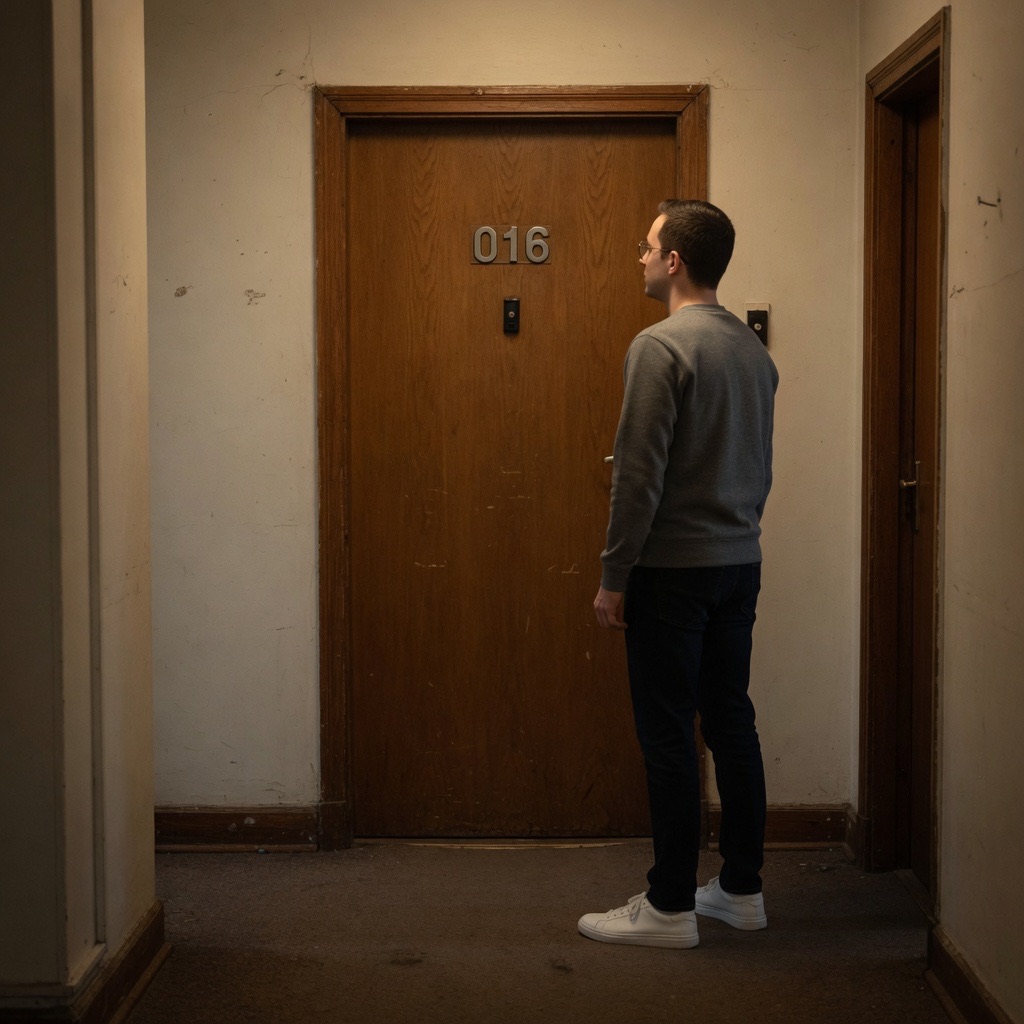
Kufferman stood before him with a quality that hadn't registered the same way before — a regal stillness, like someone accustomed to a different kind of room. He gestured toward the couch. Kyle sat in the middle cushion. Kufferman took one of the two chairs across the coffee table.
"Tea?"
God, no. "Oh — no, thank you."
The apartment smelled of the same aroma as before, but with a spicy note underneath now, something sharper. Kufferman rose and said he'd be right back. The way he moved toward the kitchen was the thing Kyle couldn't name — he carried himself like someone wearing a kimono, though he wasn't wearing one. The precision was in the posture, the deliberateness of each step. Kyle watched him go and said nothing.
When Kufferman returned and sat, he asked: "So. How have you been?"
He seemed to already know the answer.
Kyle felt immediately that he should not have come back. He reached into his bag and slid the book across the coffee table — the one Kufferman had given him the last time.
"What did you think?"
"It was very interesting," Kyle said. He had not opened it. "I skipped the first part like you recommended. Egyptology is always interesting."
Kufferman studied him. Not with suspicion — with something worse. The look said: I know you're lying, and it's fine, and we both know it. He said nothing about it. He began to talk about squares, ancient diagrams, the geometry of the early builders.
Kyle found himself losing focus. Not from boredom — it wasn't that. More like a gentle current pulling him sideways. Kufferman's voice became a background frequency, and inside Kyle's mind a different image assembled itself: Kufferman, miniaturized, walking through narrow stone passages deep in the architecture of Kyle's own brain. He moved without hurry, stopping occasionally to produce a skeleton key, unlock a small tomb-shaped door, peer inside — then close it and continue down the corridor.
"Tell me how the project is going, Kyle."
Kyle snapped back.
"It's going well — actually, it's not going well at all." The honesty surprised him. "I feel like I'm spinning in circles."
Kufferman studied him carefully. "And why do you think that is?"
Uh oh. "I don't know. I don't have the energy. The focus. Something."
"Something — what?"
"I just don't feel like I'm…" He trailed off.
Kufferman waited.
"…myself."
He knew Kufferman was reading the room — probably reading more than the room. Maybe already knew about the hallucination in the apartment, about the visit to the doctor afterward. The feeling was confessional and urgent, like needing to either speak or run.
"Tell me what's really going on."
That was it. Kyle couldn't hold it.
He described everything. The lost time in the apartment. The expanded senses afterward. The way normal had returned so abruptly it almost hurt. The whole time, Kufferman listened and nodded. He was entirely unimpressed by the absurdity of it.
"And what do you think happened?" Kyle asked. "I assumed — allergic reaction."
"Is that what your doctor said?"
Kyle stopped. How did he know I went to a doctor.
"I mean, if you went to a doctor. I don't know if you did."
Kufferman was definitely reading his mind.
"He said it was stress. He suggested I see—" Kyle looked up and caught Kufferman's eyes. "A therapist."
"Did you?"
"Yes. Someone I'd seen before. When I was in the Navy."
"I remember you mentioning him."
"You do?"
"Of course. You spoke about him quite a bit on the Florida trip."
Kyle searched back. He didn't remember that conversation. He didn't remember approximately twenty hours of that trip, so it was possible. It was entirely possible.
Kufferman began to talk — gently, steadily — about stress, the brain, the body's rational response to overload. He was convincing. He was a doctor. Kyle felt himself drifting again, and there was Kufferman in the vision: standing at the front of a lecture hall, a blown-up diagram of Kyle's brain projected behind him. Hundreds of students surrounded Kyle, all of them nodding. Kufferman was explaining the architecture — the entry points, the locks, the doors that could be opened without the owner ever knowing.
Kyle, I hate to do this.
This was it. The moment. The psychological coup de grâce. Kyle would spend the rest of his life as a mind-numbed secondary character in someone else's hallucination. He doubted Jai would even come looking. He sat very still and accepted it.
"I have a patient in five minutes. Telehealth." Kufferman smiled. "Good thing he's a kleptomaniac." He glanced around at his shelves of small objects.
Kyle breathed out loud.
"Oh — of course. Well, thank you. I hope to see you again soon."
"We still need to get you moving on that project. It would reflect poorly on both of us if you didn't finish on time." The smile again, warmer now.
Kufferman walked him to the door. Kyle stepped into the hallway, nodded goodbye, and headed toward the elevator. Behind him, he heard the door close — slowly, deliberately, the last inch pulled shut with care.
Franz the Dreamweaver
Part One: The Studio
The website was called Inner Horizon Hypnotherapy. The tagline read: Unlock the door you didn't know was closed. There were five stars from forty-two reviews. One person said Franz had helped them quit smoking after seventeen years. Another said he had resolved a fear of bridges that had been ruining her commute since 1998. A third said only: You will not regret this. Kyle did not find this last one reassuring, but he made the appointment anyway.
Franz was forty-five minutes away, in a town Kyle had driven through a few times without stopping. The address turned out to be a subdivision — the kind with a name like Whispering Creek or Millbrook Estates, where every house was a slight variation of the same house. Franz's was a colonial with a two-car garage and a mailbox shaped like a barn. The lawn was recently mowed. There was a small sign near the front door that read Inner Horizon in the same font as the website.
Kyle sat in his car for a moment. Then he rang the bell.
Franz
The man who answered did not match the house.
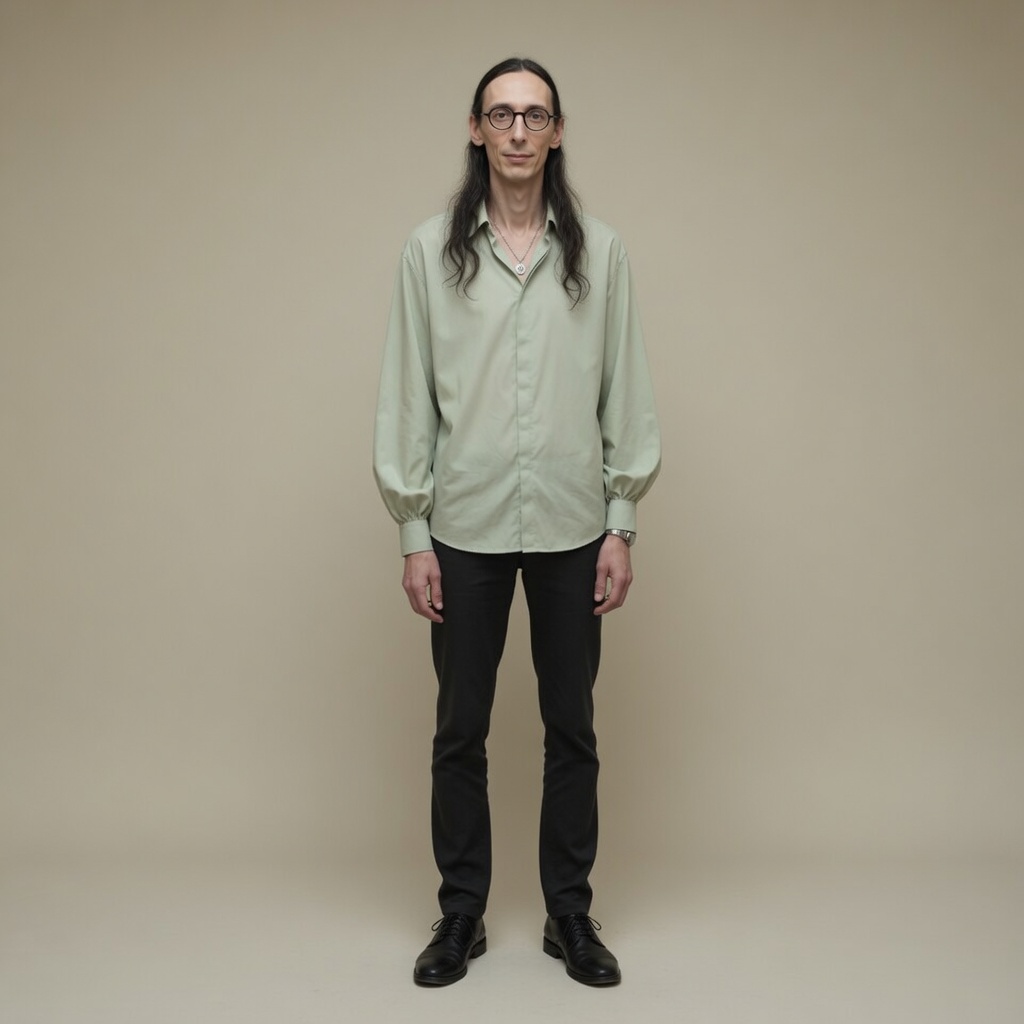
He was tall, maybe six-two, with long stringy hair past his shoulders and a loose shirt printed with tropical birds. His pants were a deep burgundy, slightly flared. He looked like someone who had been on a pirate ship for a long time and was still deciding whether to come all the way back.
"Kyle?" he said.
"Yeah."
"Franz." He extended a hand. His grip was normal. His voice was normal. He sounded like someone who might coach little league.
"Come on in."
The living room looked like it had been decorated by someone who read a magazine about living rooms and followed the instructions exactly. Beige couch. Area rug. A print of a lighthouse above the fireplace. A bowl of potpourri on the coffee table that smelled like a candle store had a mild opinion.
Franz gestured to the couch. They sat across from each other.
"So," Franz said. He folded his hands in his lap. "Tell me what's been going on."
Kyle had prepared a version of the story — shorter than the full one, edited for plausibility. He gave Franz the outline. The tea. The lost time. The vivid experiences. The sense afterward that the world had been briefly resharpened and then returned to its normal resolution.
Franz listened without interrupting. He asked a few questions. Specific ones. Had the episodes been during the day or night? Was Kyle able to recall details during the experience itself or only after? Did the heightened perception affect all senses equally or was there a dominant one?
The questions felt like they came from somewhere. Not from a website.
Then Franz asked: "Have you ever heard of lucid dreaming?"
"I've read about it a little," Kyle said. "There's a Queensrÿche song."
"Silent Lucidity," Franz said, nodding. "Good song. Oversimplifies it, but the instinct is right." He leaned back slightly. "What you're describing isn't exactly that. But it's in the neighborhood."
He explained — calmly, without the vocabulary Kufferman used — that there were states between sleeping and waking where the mind could generate experience that felt entirely real. Hypnotherapy worked in a similar register. Not sleep. Not waking. A third thing.
"I'm not going to make you cluck like a chicken," Franz said. "I want to be clear about that upfront."
"I appreciate that," Kyle said.
"What I can do is help you access whatever is generating these experiences in a more controlled way. You stay present. You can speak. You can stop at any time." He paused. "I'll be honest with you — I don't know what caused what you're describing. But I've worked with people who've had similar things. Dissociative episodes. Hypnagogic events. Occasionally something I can't fully explain."
He said the last part without drama. Kyle found this more unsettling than if he had said it dramatically.
They discussed the fee. It was reasonable. Franz had a card reader. This also felt oddly reassuring.
"Ready to see the studio?" Franz asked.
They walked down the hallway past three closed doors. Kyle noticed one had a padlock. He did not ask. They went through what appeared to be a utility room — washer, dryer, a shelf of cleaning supplies — and through a door at the far end.
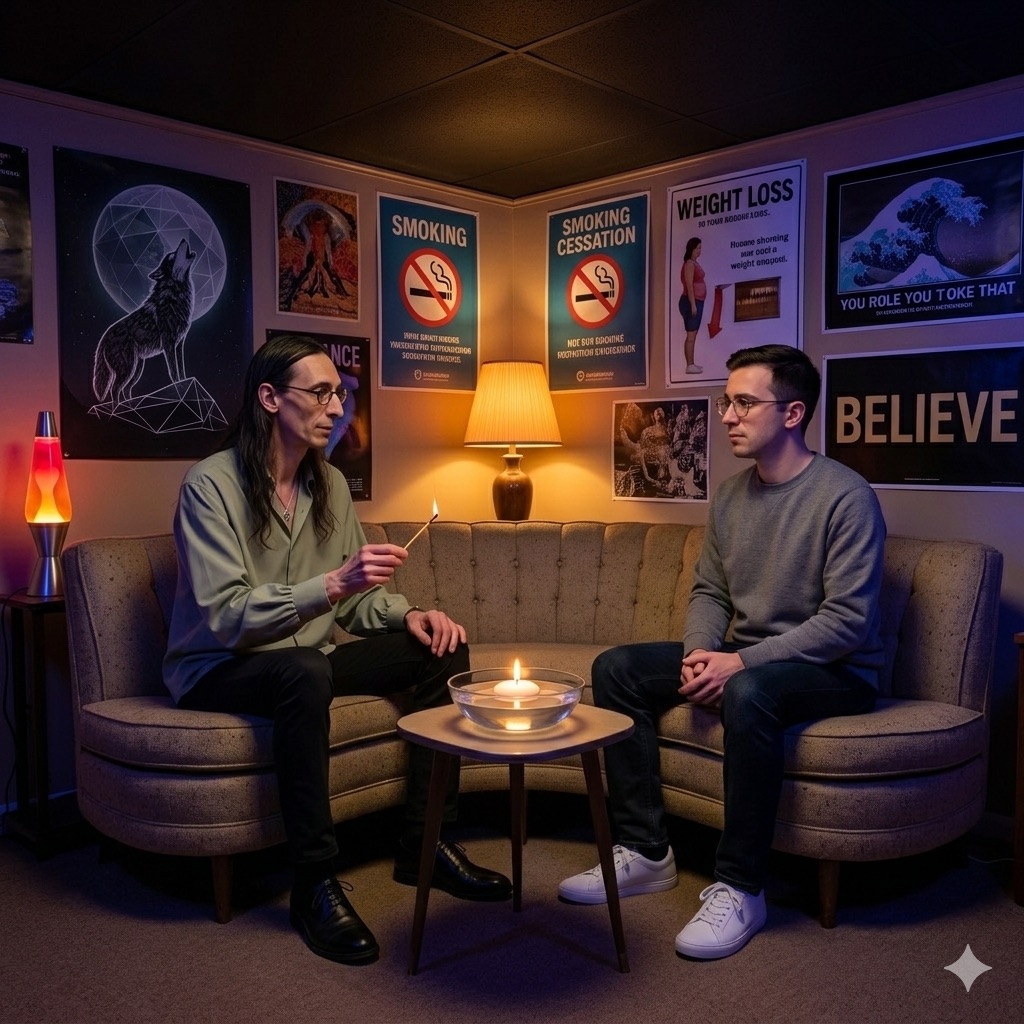
The garage had been converted. Kyle had expected something strange, and it was, but not in the way he'd prepared for. The ceiling was low and painted dark. There were lamps with amber bulbs that gave everything a warm underwater quality. In the corner, a lava lamp moved through its slow amber cycles. A black light tube ran along one wall, and beneath it was a poster — a wolf howling at a geometric moon, the colors shifting in the UV light.
On the other walls: motivational posters. Every journey begins with a single step. You are stronger than you think. One about quitting smoking that featured a cigarette with a red X through it. One about weight loss. One that simply said BELIEVE in large block letters above a mountain.
The sofa was circular, low to the ground, upholstered in dark fabric. It formed almost a complete ring around a small circular table, with one gap for entry. On the table, in a shallow glass bowl, a white candle floated in water.
They sat. The gap in the sofa was behind them now.
Franz lit the candle with a long match. He shook it out slowly.
"Before we start," he said, "I want you to know that nothing that happens in here is going to hurt you. You're going to be aware the whole time. If at any point you want to stop, you say so and we stop."
Kyle nodded.
"One more thing." Franz looked at him steadily. "Whatever you find in there — whatever comes up — I want you to try not to be afraid of it. Fear is usually the thing that makes it worse, not the thing itself."
Kyle thought about Kufferman in his brain with a skeleton key.
"Okay," he said.
Franz settled back, placed his hands on his knees, and said, in exactly the same coaching-little-league voice he'd used for everything else:
"Let's begin."
Part Two: The Session
He did not dim the lights. He turned them off entirely. The amber lamps did the rest. The lava lamp moved in its slow, indifferent way. The wolf on the poster howled at a moon that was made of angles.
Kyle sat in the circular sofa and looked at the floating candle in the bowl and felt slightly ridiculous. He had driven forty-five minutes for this. He had searched vivid dreams hallucination reincarnation at two in the morning and this is where it had taken him.
"I want you to breathe," Franz said. He was sitting across the table, elbows on knees, no clipboard, no notepad. "Not the way you think you're supposed to breathe. The way you actually breathe."
Kyle breathed. Franz watched.
"Good. Now I want you to tell me the last time you felt like you knew exactly where you were."
Kyle thought about it. "The road trip. Going south."
"Before or after the lost time?"
Kyle looked up.
Franz did not explain how he knew about the lost time. He waited.
"Before," Kyle said.
"Okay. Go back there. You're driving. It's highway. What do you see?"
Kyle described it. The flat miles. The exit signs. Kufferman in the back seat. The unplaceable language. The way the man with the flat tire had stood up afterward — straighter, like something had been returned to him.
"And then?"
"And then nothing. And then we were farther south than we should have been."
"What does farther south feel like?"
Kyle thought about that for a long time. "Like a chapter you can tell you missed. The story kept going. You weren't there for it."
Franz nodded slowly. He reached forward and adjusted the floating candle so it was centered in the bowl.
"I want you to go into the chapter you missed," Franz said. "Not around it. Into it. It's not gone. You were there. You just weren't the one watching."
What followed was not like the tea. There were no fire-horse processions, no cathedral lectures, no fractal smoke. It was quieter than that. It was like a room he had always known about and never entered.
He was in the car. He could see the road. Kufferman was talking.
Not in the unplaceable language. In English. Slowly. The way someone speaks to a person who is almost asleep and needs to hear something true before they go all the way under.
Kyle could not hold the exact words afterward — they came apart when he tried to examine them, the way dreams do when you reach for them directly. But the shape remained. The shape was this:
You have been here before. Not this road. This situation. The student and the teacher and the thing that cannot be said between them because saying it would be the wrong kind of knowing. You recognize this. You have always recognized this. The recognition is the proof.
Kyle sat in the circular sofa in Franz's converted garage and felt something he did not have a word for. Not belief exactly. Not surrender. Something more like a carpenter's level finding flat — a small internal click, a settling, a yes, that is the correct angle.
"There he is," Franz said quietly.
Kyle looked up.
"You didn't go under," Franz said. "You went through. There's a difference."
He reached forward and cupped his hand around the candle flame without touching it. Not to extinguish it. Just to be near it.
"The person who's been teaching you," Franz said. "He's not doing something to you. He's waiting for you to catch up to something you already know."
Kyle did not say Kufferman's name. Franz did not ask for it.
"Jai said he was my Senpai," Kyle said. It was the first time he had said it out loud.
Franz considered this. "Jai's right."
He sat back. The session was over. He had not made Kyle cluck like a chicken.
On the drive home Kyle kept both hands on the wheel and did not turn on the radio. The flat miles went past. He knew exactly where he was.
Acceptance
He went back to Franz twice more. The second session was shorter. The third was mostly silence — Franz watching, Kyle breathing, the candle doing its slow work in the bowl.
Then he stopped needing to go.
What changed was not dramatic and did not announce itself. He simply began to notice that the pattern he had been trying to see from outside was something he was already inside. Had always been inside. The geometric work he did — the ratio-stability, the continuity thresholds — was not separate from what Kufferman did. It was the same question asked in a different language. Kyle had been studying the shape of things. Kufferman had been studying what happens when the shape persists across conditions that should destroy it.
They began meeting regularly. Kufferman's apartment. Occasionally the university library. Once, for reasons that were never explained, a diner off Route 9 at six in the morning, both of them with coffee, a legal pad between them, and a shared focus that felt less like collaboration than like two instruments tuning to the same frequency.
Kyle did not confirm the reincarnation. Kufferman did not confirm it either.
It lived between them like a piece of furniture they had both agreed to walk around. The apartment was perfectly navigable. The furniture did not need to be named.
What Kyle noticed: Kufferman never seemed to run out of patience. He asked questions with the unhurried quality of someone who already knew the conversation had enough time. He was wrong about small things — names, dates, the make of a car — and completely steady on large ones. He made tea the same way every time, with the same specific unhurried sequence, and never seemed to notice that he was doing it.
And once, when Kyle arrived early and stood for a moment in the hallway before knocking, he could hear Kufferman inside — speaking. Not on the phone. The unplaceable language again. Low and even, the way a person speaks when they are reading something aloud to themselves, or remembering.
Kyle knocked. The speaking stopped. The door opened.
"You're early," Kufferman said, with complete warmth and no surprise.
"Traffic was light."
"Come in. Tea is almost ready."
Kyle came in. They did not discuss what he had heard.
The Joint Paper
The article came together the way things only come together when you stop trying to force the shape and let the shape tell you what it is.
Kyle's framework: pattern persistence in geometric systems under variable conditions. Kufferman's lens: behavioral response signatures in ungulate species — weather pattern adaptation, mating behavior, spatial cognition under stress. The overlap was not obvious until it was, and then it was so obvious that Kyle felt briefly embarrassed for not having seen it earlier.
They submitted to the Journal of Comparative Geometry. It was accepted with minor revisions. The revisions took one afternoon.
The issue, when it arrived, had both their names on it. Kyle held his copy for a moment without opening it. Kufferman looked at the cover with the same expression he used for everything — attentive, unhurried, already a little elsewhere.
"It's good work," Kyle said.
"Yes," Kufferman said. "It is."
Neither of them said anything further about it.
The scrutiny came from Kufferman's department. It had always been there — the articles that appeared fully formed over weekends, the drafts that did not exist, the presentations delivered simultaneously with publications — but Kyle was verifiable in a way the Revelator was not. Kyle had an institutional email address. A faculty advisor. Office hours. He was real and checkable and the collaboration was harder to dismiss.
A colleague — Kufferman mentioned him only as Farris — sent a careful email asking about process. Kufferman replied the same day. The reply, which Kyle never saw but heard described, was brief and entirely unhelpful in the way that only completely honest answers can be: "The process is observation. I observe until the pattern is available, and then I write what is there."
Farris did not reply. The scrutiny did not disappear. It simply had nowhere to attach.
Thanksgiving
Kufferman got in the car on a Tuesday morning and drove south on I-95.
He did not make a list. He did not consult a map. He knew where he was going the way you know the shape of a room you have slept in for years — not because you have memorized it, but because your body has.
The letter was in the glove compartment. It had been there since he received it. He did not open the compartment. He did not need to.
He drove.
Somewhere past New Haven the thinking stopped being voluntary.
It was not sleep. He knew sleep — its particular gravity, the way it pulls from below. This was different. This came from the side, or from slightly ahead, the way a sound arrives before you turn to find its source. He was still driving. His hands were on the wheel. The lane markers passed at their correct intervals. And something else was also happening.
A woman stood at the edge of a field.
He did not know the field. He did not know the woman. She was young — not a child, but young, the way people are young before the world has finished with them. She stood with her back partly to him, looking at something in the middle distance that he could not see. The light around her was the particular late-afternoon light of the southeastern coast — thick, amber, slightly tired. A Florida light.
She did not turn toward him. She did not need to.
He knew who she was.
He had never seen a photograph. There was no photograph. And yet the recognition was total, the way certain knowledge is total — arriving not as a conclusion but as something that was always already there, waiting for the occasion to surface.
He drove. She stood at the edge of the field. And then the field was gone.
He had been born in Coral Gables in March of 1968. His mother was fourteen — not fifteen, as the intake paperwork would later state, a clerical error no one corrected. His father was not listed on the birth record. He spent his first three years in a sequence of foster arrangements that were not unkind and were not home.
He was adopted in California. The couple — the paperwork described them as bohemian, artistic, itinerant, which was accurate without being complete — lived in Connecticut but moved through the world the way certain people do, following something they could not fully name and never tried to. They went where the energy was good. They said this without irony.
Every summer they went to Brazil.
He remembered these summers in fragments that were more sensory than narrative: humidity that arrived before you stepped outside; long bus rides through green that had no edge; open-air kitchens where women cooked things over fires that were not decorative; the sound of Portuguese being spoken by adults who knew things and were not in a hurry to explain them; drumming at night, distant, rhythmic, operating on a frequency the body registered before the ears did.
His parents never explained why Brazil specifically. They said: it's good for him. They believed in cycles, in energy centers, in the value of exposure to things that resist explanation. They were not negligent. They were simply organized around a different set of priorities than most, and he grew up inside those priorities the way children grow up inside weather — without being able to see it whole until later, from elsewhere.
They were loosely affiliated with a group called the Church of the First Harvest. The name was misleading. It was not a church. It did not worship. Its members gathered around long tables in old barns, ate together, maintained a posture of quiet attention toward the natural world, and declined to call any of it religious. The tone was just strange enough that outsiders assumed there was more beneath the surface. There was. No one spoke of it.
He left the household at fifteen.
The Rhode Island records noted this as simply as possible: the subject left the adoptive household at approximately age fifteen. No reason was documented. No attempt at retrieval or contact was made by the adoptive parents. This was not a failure. It was more like a completion — a natural terminus both parties had been moving toward without needing to discuss it. He was not running from anything. He knew what he was. He needed to become it somewhere else.
A social worker in Rhode Island described him in her closing memorandum as quiet, observant, and unusually self-directed. She closed the file. He graduated. He went to Connecticut.
The letter had come six and a half months ago.
He had read it until the paper remembered the folds.
The visions came and went like interference on a frequency he had learned not to fight.
Not hallucinations. That was not the right word. Hallucinations implied a departure from reality, and this was not a departure. It was an addition — a second channel running alongside the first, perceivable if you did not try too hard to look at it directly.
He had been aware of the channel for as long as he could remember. In Brazil it had been louder. At the First Harvest gatherings, sitting at the long tables in the barn light, he had sometimes felt it as a pressure behind the sternum — not unpleasant, just present. Like knowing there is a room adjacent to the one you're in, hearing nothing through the wall, and understanding anyway that the room is occupied.
He had never named what occupied it.
He did not name it now.
What came through, as the highway unrolled south — not in words, not in images exactly, but in something prior to both, something that arrived as comprehension before content — was the familiar sense of architecture. Not his architecture. Not anything he had designed or maintained. He was not the architect. He had always known this. He was the one who could hear the building, who knew where the load-bearing walls were, who could move through the space without disturbing it.
The woman at the edge of the field had not been a vision of that. She had been something else. More private. Below the architecture. His.
He drove.
The exit signs passed. Georgia. Then Florida. The light changed the way Florida light does — a specific quality of warmth and weight that does not occur anywhere else, that arrives before you cross the state line, as if the light knows where it is. He had been in this light before. In other lives, in these summers, in the recollection of both which had become, over time, impossible to fully separate.
He stopped once for gas. Once for coffee, which he drank in the parking lot, leaning against the car. He was not tired. He was somewhere between tired and past it — in the register beyond, where the body simply continues.
He got back in the car.
He kept driving.
The highway eventually became a road, and the road eventually became smaller, and the direction remained south, and at some point the thinking stopped again and the channel opened briefly and what came through this time was not a woman in a field but something structural — the sense of a task approaching completion the way a sentence approaches its period. Not an ending. A resting point. A place where the accumulated weight sets itself down.
He let it pass through.
He drove.
The road went south.
Whether he reached it — whether the road ended where he intended, whether the completion arrived in the form he was moving toward — the road does not say. He was driving. And then the chapter was over.
Track B — KyleThey took Jai's car because Kyle's had a slow leak in the rear left tire that he'd been meaning to deal with for three weeks. Jai drove the way he did everything — unhurried, one hand on the wheel, radio on low, apparently paying attention to neither the road nor the conversation but somehow managing both.
"So your dad runs a dojo," Kyle said.
"Mm."
"How long has he been doing that."
"Long time. Before I was born." Jai changed lanes without signaling. "He came over when he was like seven. His parents brought him. He was doing karate by the time he was nine."
"And he just — made a career of it."
"Eventually. He did other stuff first." Jai glanced in the mirror. "He doesn't talk about the other stuff much."
Kyle watched the highway. "What's your mom like."
Jai considered this with more seriousness than the question seemed to require. "She's a lot," he said finally, which Kyle understood to be affectionate.
"Texas?"
"Born and raised. I have no idea how they ended up together. I asked once."
"What did she say?"
"She said your father swept me off my feet." Jai said this in a voice that was not quite an impression of his mother but contained her. "And then she laughed for like a full minute."
"And your dad?"
"He was in the other room. He said, I won the competition." Jai shrugged. "I don't know what that means. I've never asked a follow-up."
Kyle thought about that. "Do you think he literally won a competition."
"I think he literally won a competition."
They drove for a while without talking. The exit signs passed. Jai turned the radio down further without explanation.
"He wants me to take over the dojo," Jai said. "Eventually."
"Do you want to?"
Jai looked at the road. "I want to want to," he said. "That's where I am right now."
Kyle didn't push it. Jai turned the radio back up slightly. They drove the rest of the way like that — easy, undemanding, the comfortable silence of two people who have shared a bathroom for long enough that they no longer need to perform.

Mora & Jai

Kyle & Morales
The house was in a subdivision that had been built in the eighties and had aged into itself — mature trees, slightly uneven driveways, the particular dignity of neighborhoods that had stopped trying to look new. Jai's parents' house was at the end of a cul-de-sac. There were three other cars already in the driveway.
Before they reached the door it opened.
"Hi y'all!"
Pam was small, bright-eyed, and appeared to operate at a frequency slightly above the ambient energy of any room she was in — not exhausting, just elevating, the way good weather is elevating. She had Jai's eyes and a Texas accent that had not softened one degree despite what Kyle estimated was several decades in the Northeast. She hugged Jai the way mothers hug sons they don't see enough and then turned to Kyle with the same energy, undiminished.
"You must be Kyle. Jai talks about you all the time."
"Mom—"
"He does. Come in, come in, it is freezing, why is it always this cold up here, I have never gotten used to it and I have been here since 1987—"
She ushered them through the door and the house arrived all at once — warmth, the smell of something that had been cooking since morning, the sound of a football game from another room, two cousins Kyle didn't know crossing the hallway without acknowledging anyone. The house felt like Pam. It was full and comfortable and slightly louder than necessary and you understood immediately that this was intentional, that someone had decided a house should feel this way and had maintained that decision for decades.
Mora was in the kitchen doorway.
He was not tall — an inch shorter than Jai, Kyle guessed — but he occupied the space he was in with a completeness that made the measurement irrelevant. He was lean, unhurried, and watching in the way of someone who has spent a long time learning to watch without appearing to. He nodded at Jai. He looked at Kyle for a moment with an attention that was not unfriendly and was also not casual.
"Kyle," he said.
"Mr. Mora. Thank you for having me."
He nodded once, the way you nod when someone has said the correct thing, and returned to the kitchen.
Dinner was eleven people and Pam treated the number as unremarkable. She moved between the kitchen and the table with the efficiency of someone who had done this many times and enjoyed doing it, which was different from someone who had simply done it many times. She asked Kyle questions — where he was from, what he was studying, had he been to Texas, he needed to go to Texas — and listened to his answers with genuine interest, following up, retaining details, the full opposite of performative hospitality.
Mora ate and watched. He said perhaps four things during dinner, each of them precise, none of them wasted. He had the quality of a room with good acoustics — everything that happened in his vicinity seemed to land more clearly than it would have otherwise. Kyle found himself aware of being watched without being able to catch Mora watching.
After dinner, when Jai had migrated to the kitchen to help with dishes and the cousins had spread into the living room, Mora appeared at Kyle's elbow with a quiet inevitability.
"Come sit," he said.
It was not a question. Kyle followed him to a small room off the hallway — a study, bookshelves, two chairs, framed photographs on one wall. Mora sat. Kyle sat.
"Jai told me about this professor of yours," Mora said.
Kyle went completely still.
Not because it was a surprise that Jai had mentioned Kufferman — of course he had, at some point, in some context. What stopped Kyle was the implication underneath it: that Jai had been paying attention. That the roommate who always had a phone in his hand and appeared to register nothing beyond the immediate radius of his own couch had, in fact, been tracking the situation with enough care to bring it to his father.
"He wouldn't," Kyle said.
Kyle waited.
"Tell me what your relationship with this man is," Mora said. "In your own words."
Kyle gave him the version he'd given people before — the road trip, the meeting, the work, the joint paper. He kept it factual. Mora listened with the same quality of attention he'd had at dinner — complete, undemonstrative, already a little further along.
When Kyle finished, Mora was quiet for a moment.
"You believe he is your senpai," Mora said.
"Jai said that. I'm not sure I'd use that word."
"But you understand what the word means."
"More or less."
Mora nodded slowly. He looked at the wall for a moment — not at any particular photograph, just at the wall — and then back at Kyle.
"There is another word," he said. "Tarashi."
He said it without particular emphasis. The way you say a word that doesn't need help from tone.
"I don't know that one," Kyle said.
"It is a specific kind of person," Mora said. "Someone who makes you feel that they see you. That you are special to them. That the attention they give you is because of something in you that they have recognized." He paused. "The attention is real. The recognition is real. The feeling is genuine. That is what makes it what it is."
Kyle said nothing.
"The tarashi is not lying to you," Mora said. "That is the important thing to understand. He believes what he is doing. He believes in the attention. But the attention is a technique. He cannot separate what he feels from what he uses. They are the same thing."
The room was quiet. Down the hall, Pam said something and one of the cousins laughed.
"You think Kufferman is that," Kyle said.
Mora looked at him steadily. "I think you should understand what the word means," he said, "and decide for yourself."
He stood. The conversation was over.
"Your thesis," he said, at the door. "Jai says it's going well now."
"It is. Better than it was."
Mora nodded. "Good," he said. And then: "Whatever this man opened in you — that part is yours. That was always going to be yours." He looked at Kyle with the same complete attention he'd had since the moment they met. "Be careful that you do not confuse the door with what is behind it."
He left.
Kyle sat in the chair for another moment. Down the hall Pam was laughing at something, full and unguarded, the laugh of someone who does it often and means it every time.
He drove home that night with two things in the passenger seat: tarashi, and the fact that Jai had been paying attention the whole time and he hadn't known.
He didn't know what to do with either of them yet.
He would know later. He would know exactly when.
In Transit
The first week Kufferman didn't respond to emails, Kyle assumed he was traveling. He had mentioned something once about a conference in Vancouver — or maybe it was a colleague in Vancouver, Kyle couldn't remember exactly. The point was that Kufferman traveled, and when he traveled he went quiet, and that was consistent with everything Kyle knew about him.
The second week Kyle assumed the same thing, with slightly less confidence.
By the third week he had stopped assuming anything and was simply waiting, which was a different activity entirely.
He sent one more email. The subject line was blank. The body said: Checking in. Hope you're well. He read it back, decided it was fine, sent it. He did not send another one.
He asked around, carefully. A department administrator at the university said Dr. Kufferman was on an approved leave. She said this in the tone of someone reading from a template. When Kyle asked where or for how long, she said she wasn't able to share that information, which told him that either she didn't have it or she'd been told not to.
He told Jai.
Jai said, "Huh." And then: "So he's gone."
"He's on leave."
"Right." Jai went back to his phone. Then: "You okay?"
"Yeah," Kyle said. "I'm fine."
He was mostly fine. The work continued. The thesis was, finally and somewhat miraculously, moving. The joint paper had opened something up — a framework for thinking about his own material that had not been available before. He worked in the mornings now, which was new. He made his own tea, badly, in a mug that said Connecticut College Athletics in faded letters. He did not drink Kufferman's tea again and had no plans to.
He was fine. He just kept noticing the absence.
Not dramatically. Not in a way he would have described to anyone, including Jai. More the way you notice a chair that used to be in a room. You don't think about the chair. You just keep almost sitting in it.
Item Ready for Collection — Logan, K.
From: Administrative Services — Special Collections
An item has been prepared for your collection pursuant to the instructions of the depositor. Please present this message at the Reading Room, Elkins Hall, Room 004, between the hours of 9 AM and 4 PM, Monday through Friday. Ask for Gerald.
Please note: Room 004 is accessible via the stairwell on the north side of the building. The elevator does not serve the lower level. If you reach the vending machines, you have gone too far.
Kyle went on a Wednesday. Elkins Hall was on the far side of campus, a building he had been in once, maybe twice. It smelled of old paper and the particular institutional heat of radiators that had been running since the 1960s. He found the north stairwell. He went down. He did not reach the vending machines.
Room 004 was a wood-paneled anteroom with a long counter and two desks behind it, both of which appeared to have been last updated during the Nixon administration. A man in his late sixties sat at one of them, reading something in a manila folder.
"Gerald?"
The man looked up. "That's me."
Kyle showed him the message on his phone. Gerald looked at it with the measured interest of someone who processes unusual things regularly and has made his peace with it. He disappeared through a door behind the counter and returned with a small cardboard box, sealed with brown tape, Kyle's name written on top in a handwriting Kyle recognized immediately.
He did not open it there.
He opened it in his car, in the parking lot, engine off.
Inside: a jump drive. Black, small, no label. A folded piece of paper.
He opened the paper.
Kyle —
There is a computer. It is new and has not been initialized. The address below is where you will find it. Go when you are ready. Not before.
The jump drive goes in first.
P.S. If Gerald gave you any trouble, I apologize. He means well.
Kyle sat in the parking lot for a moment.
He drove home. He put the jump drive on his desk. He looked at it for the rest of the afternoon. He made his bad tea. He ate dinner. He watched half of something on television without registering what it was.
He was ready. He had probably been ready since Thanksgiving. He just wanted to sit with it for one more night, the way you sit with something good before you open it, because opening it means it has begun and beginning means it will also, eventually, end.
In the morning he drove to the park.
The bench was there. Kufferman was not.
The computer was there — a laptop, new in the way that new things look before anyone has touched them, set on the bench with a care that suggested it had been placed and not simply left. There was no bag. No note. No explanation beyond what had already been given.
Kyle sat down next to it.
The park was quiet. A man walked a dog on the far path. Two kids on bikes crossed the open field without looking at him. The maintenance shed behind him ticked once in the morning cold, metal adjusting to temperature, the ordinary physics of ordinary things.
He opened the laptop. The screen was dark. He pressed the power button and it chimed — that clean, uncluttered sound of a machine that has never been used.
A setup screen appeared, asking for a language. Kyle did not select one.
He plugged in the jump drive.
For a moment nothing happened. Then the setup screen disappeared. The desktop did not appear. Instead: a terminal window, black, the cursor blinking once before the text began.
It did not ask him anything. It did not wait for input.
It ran.
Lines of code scrolled at a pace that was fast but not too fast to watch — downloading, verifying, installing, executing, each line completing before the next began, the whole sequence with the quality of something that had been written out long in advance and was now simply being read aloud. Kyle watched it the way you watch something you don't fully understand but recognize as intentional. The man with the dog passed behind him. The kids on bikes were gone.
The terminal ran for several minutes. Then it stopped.
A single line: Initializing.
The screen went dark. The machine restarted.
Kyle waited.
The laptop chimed again. The desktop appeared — clean, no icons, no files visible. For a moment nothing else happened, and Kyle thought: that's it. That's the whole thing. He felt a complicated mix of emotions that he did not try to untangle.
Then the browser opened on its own.
A URL appeared in the address bar, typed out one character at a time, unhurried, the way Kufferman did everything:
The page loaded.
Kyle had seen it before, of course. The joke therapy site. The thing that had seemed, when he first encountered it, like a piece of promotional absurdity — a slightly campy digital calling card, the kind of thing you click through once and close. He had not thought much about it since.
He thought about it now.
The CGI model was there on the screen. Kufferman's face — or the approximation of it, rendered in whatever system had generated it, the geometry slightly too smooth, the lighting slightly too even. Obviously not him. A representation of him, built to be recognized and not quite believed.
Kyle looked at the screen.
The model was smiling. The particular smile — the one that said I know more than I'm going to tell you, and we have both made our peace with that. The eyes that were already a little further along in the conversation.
Kyle had seen that expression a hundred times. Across a coffee table in a precisely organized apartment. Across a legal pad in a diner off Route 9 at six in the morning. In a rearview mirror on a highway going south, hands loose on the wheel, eyes forward, unhurried, already home.
He was not here. He was obviously not here.
There he was.
Clever devil, Kyle thought. He did not say it out loud. He didn't need to.
He sat on the bench in the quiet park with the laptop open on his knees and looked at the screen for a while. The cursor blinked in the address bar. The model smiled its particular smile. The maintenance shed ticked behind him in the morning cold.
He closed the laptop carefully, the way you close something you intend to keep.
He sat for another minute.
Then he stood, tucked the laptop under his arm, and walked back to his car.
Wauchula
The cemetery in Wauchula was small and well-kept, which was Arturo's doing. He had been groundskeeper there for nineteen years and he took the work seriously in the way of someone who understands that the people who use a place cannot speak for themselves.
He was on the mower when he heard gravel behind him. He cut the engine.
The man was small. Blue polo shirt, which was optimistic for November. He walked with the deliberateness of someone who knew exactly where he was going and had known for some time — not in a hurry, just already arrived, in some interior sense, before he'd physically gotten there.
Arturo watched him.
The man stopped a few feet away and looked at him. Then he bowed. A real bow — short, precise, the kind that means something.
Arturo stood there for a second. Then, feeling slightly ridiculous, he bowed back.
The man turned and walked through the gate into the cemetery.
Arturo watched him go. Then he got the mower back on the trailer and pulled his second beer from the cab. He leaned against the truck and drank it. The cemetery was quiet. It was always quiet — that was the whole point — but this was a different quality of quiet.
He checked his watch. 6:05.
He looked at the gate. No one coming out.
Dammit.
One gate, chain-link all the way around, and the little guy hadn't looked like a fence-climber. He set the beer on the hood and walked back through.
The cemetery wasn't large. A circular path, headstones in the center, headstones along the sides. He walked it counterclockwise, looking in all directions. The last of the light was on the fence line. The stones caught what was left of it.
No one.
He stopped and stood still and listened. Nothing moved. The man in the blue polo was simply not there.
Then he noticed the envelope.
It was sitting on top of a small headstone — just balanced there. He picked it up. A clear address window on the front. The name behind the window read Steven Kufferman, and below it an address.
He turned it over. Unsealed. He opened it.
The letter inside had been folded and unfolded so many times that the creases had gone soft, the paper worn thin at the intersections. He unfolded it carefully.
Re: Notification of Death — Birth Parent
Dear Mr. Kufferman,
We are writing to inform you that Laura Hoffman, identified in our records as your birth mother, passed away on October 14, 2026. Date of birth: March 3, 1965.
Ms. Hoffman requested prior to her passing that you be notified in the event of her death. This letter constitutes that notification.
No further action is required on your part.
Arturo read it twice. He folded it back along the same worn lines and put it in his pocket.
He looked at the headstone.
He looked around one more time. Headstones. Dead grass. Dark coming in fast from the east.
He walked to the front gate, latched it, and got in his truck.
He drove away faster than he normally would have.